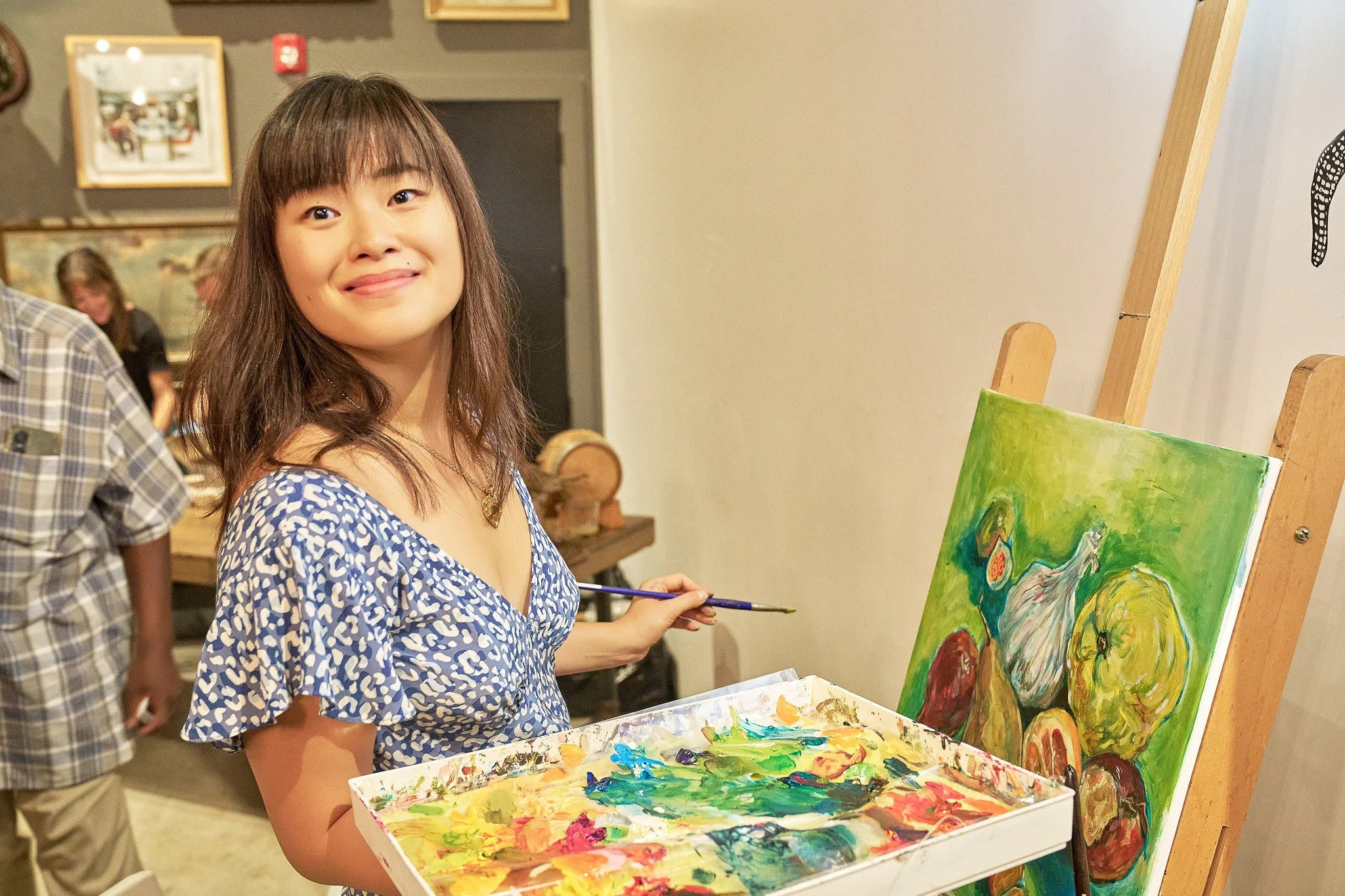
Photo credit (above): Nick Seth-Smith
This Sunday, we’re welcoming local artist Emma Peters of Fruit Stand Art to the Mar Vista Green Tent for a special live painting experience celebrating the beauty of seasonal produce.
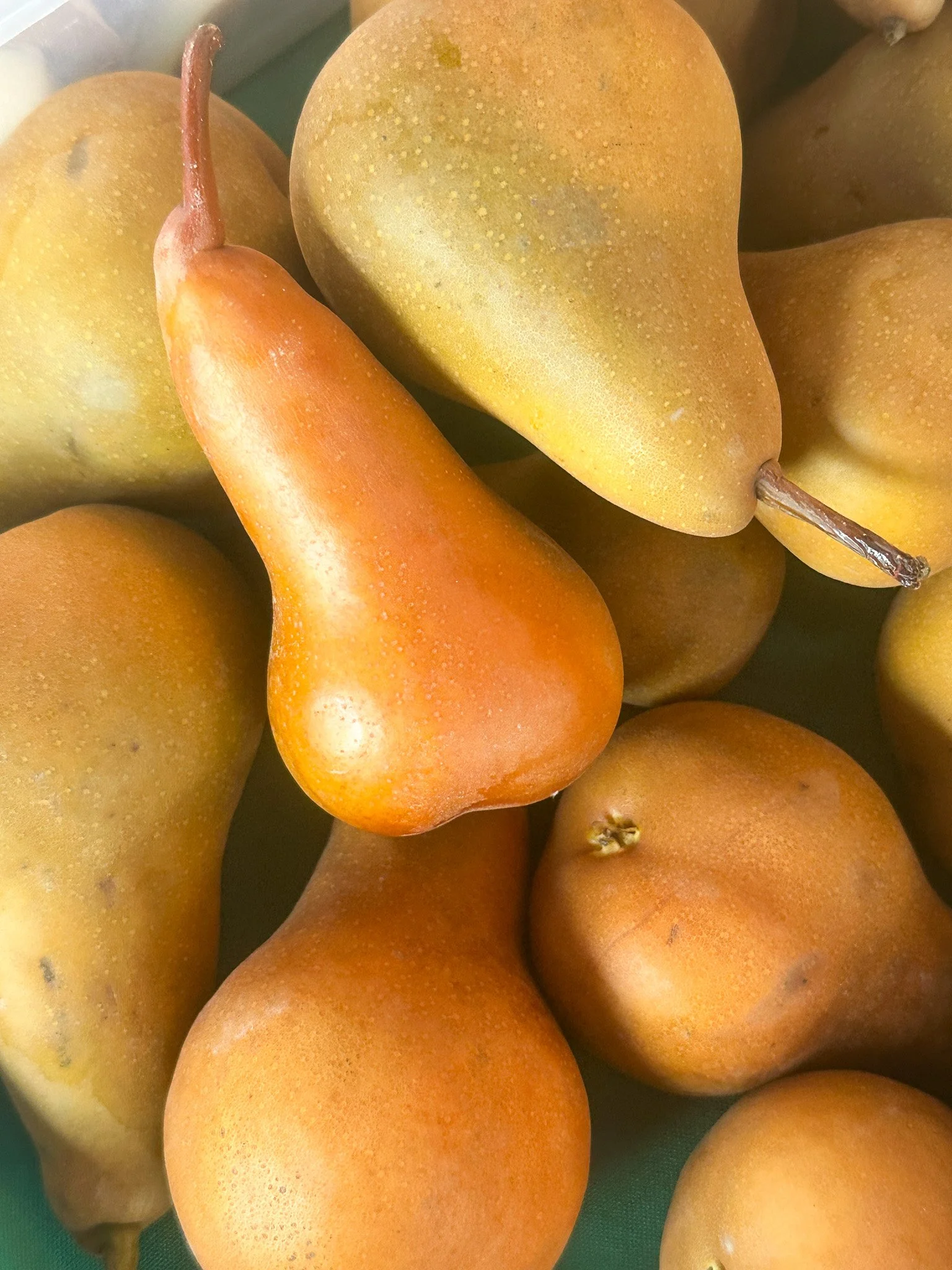
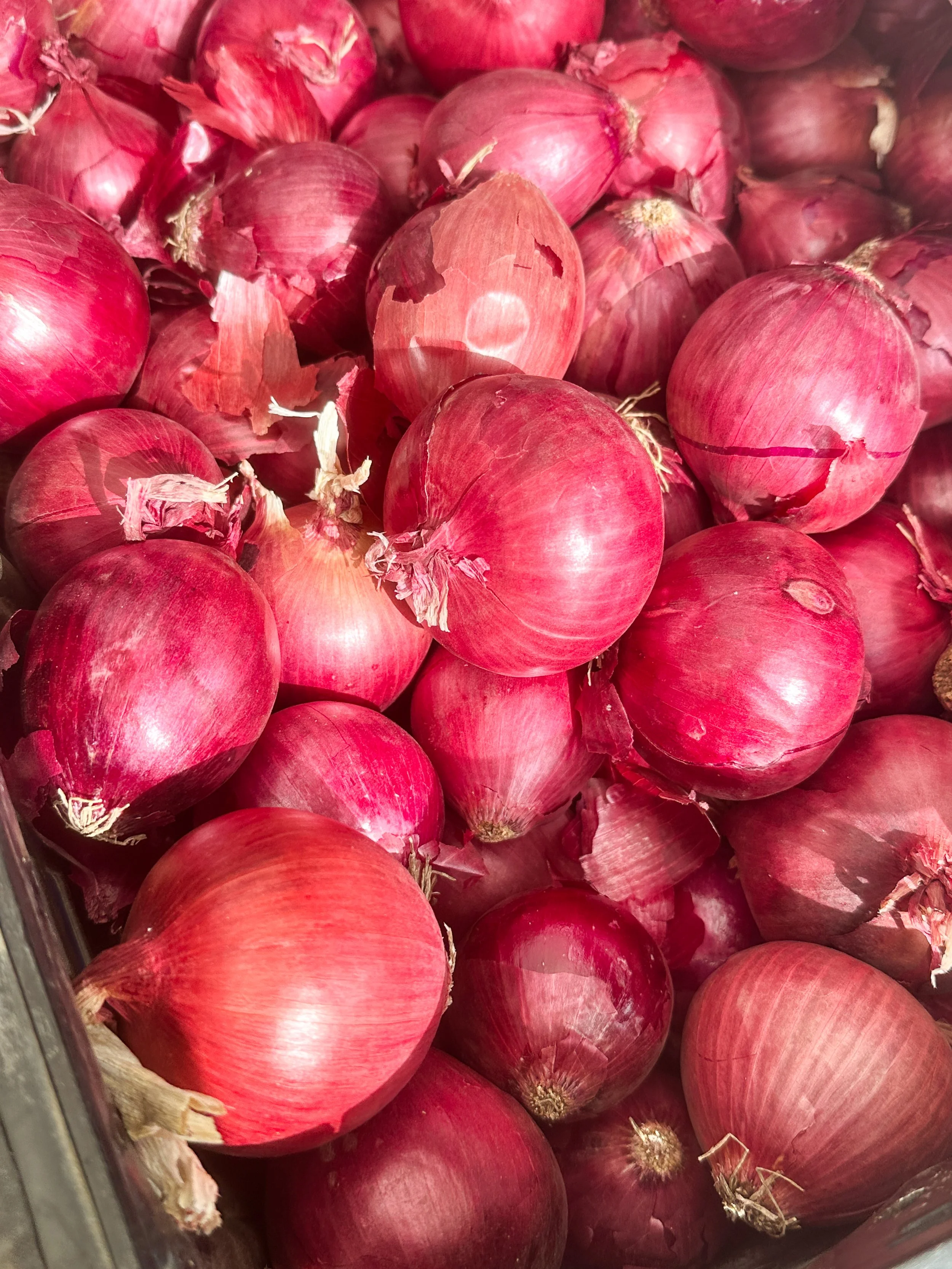
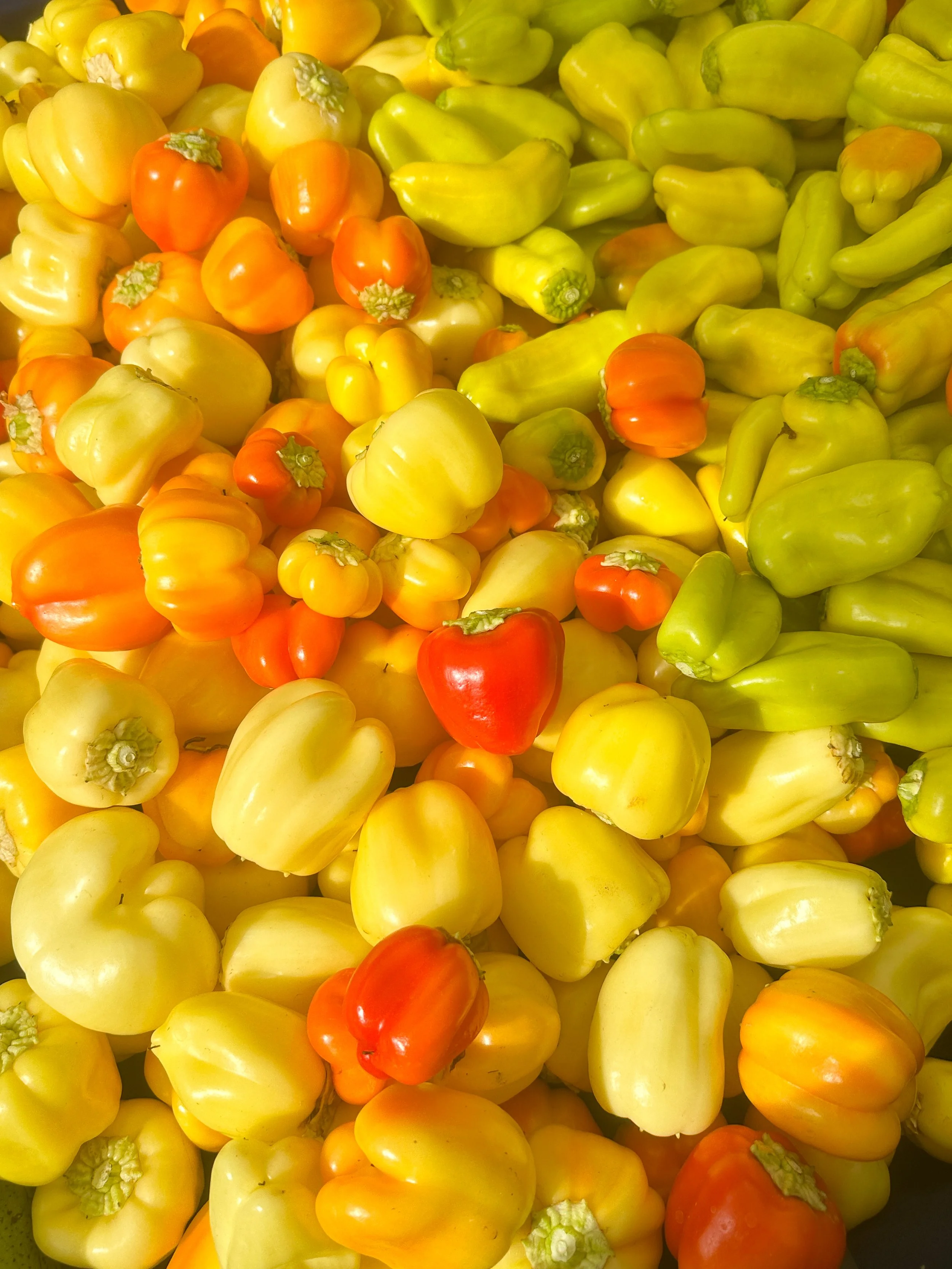
Emma will paint a still life inspired by the fruits and vegetables available from vendors at the Mar Vista Farmers’ Market. Her work invites us to slow down and appreciate the everyday beauty of food, nature and the connections they bring into our lives.
Meet the Artist
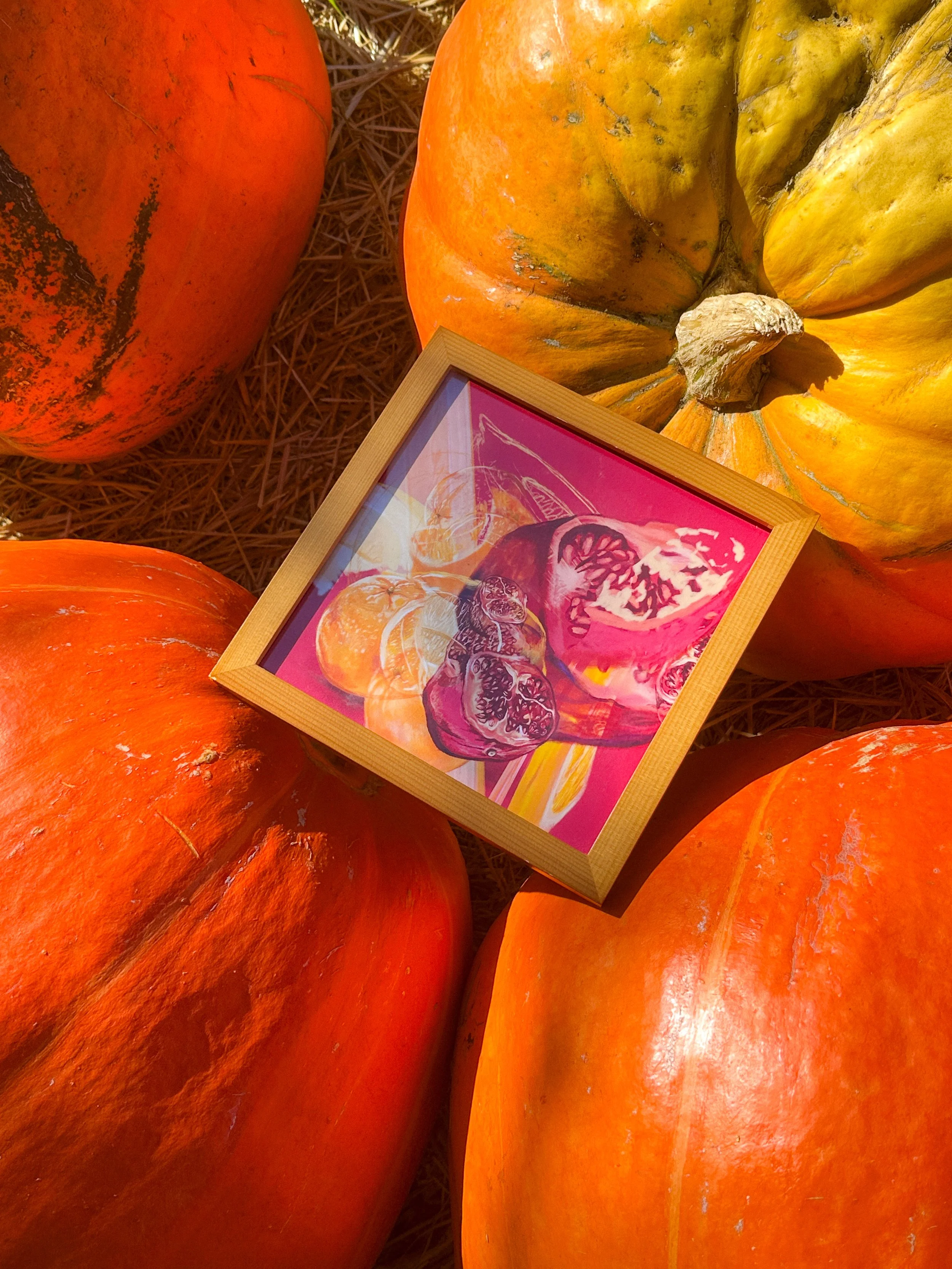
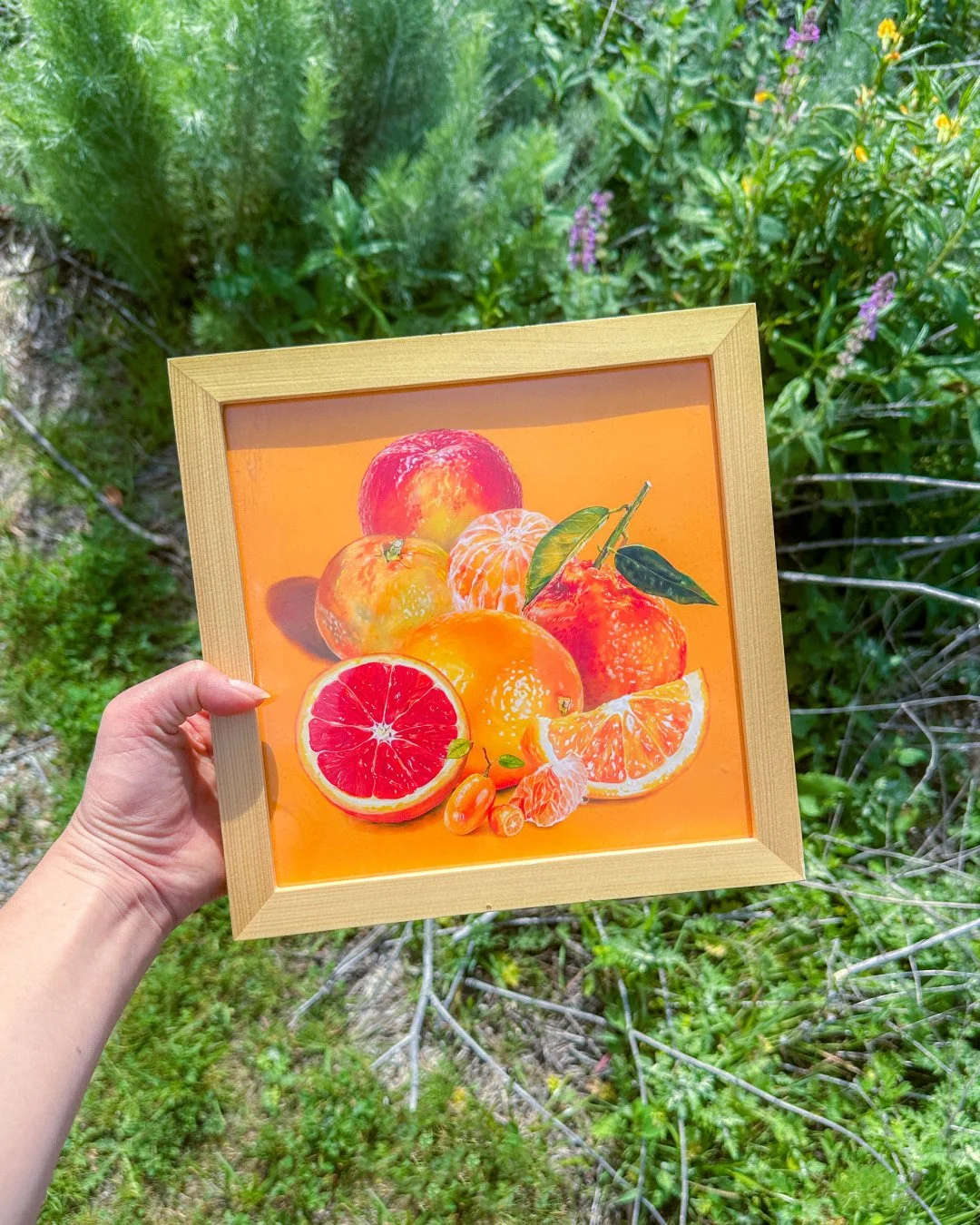
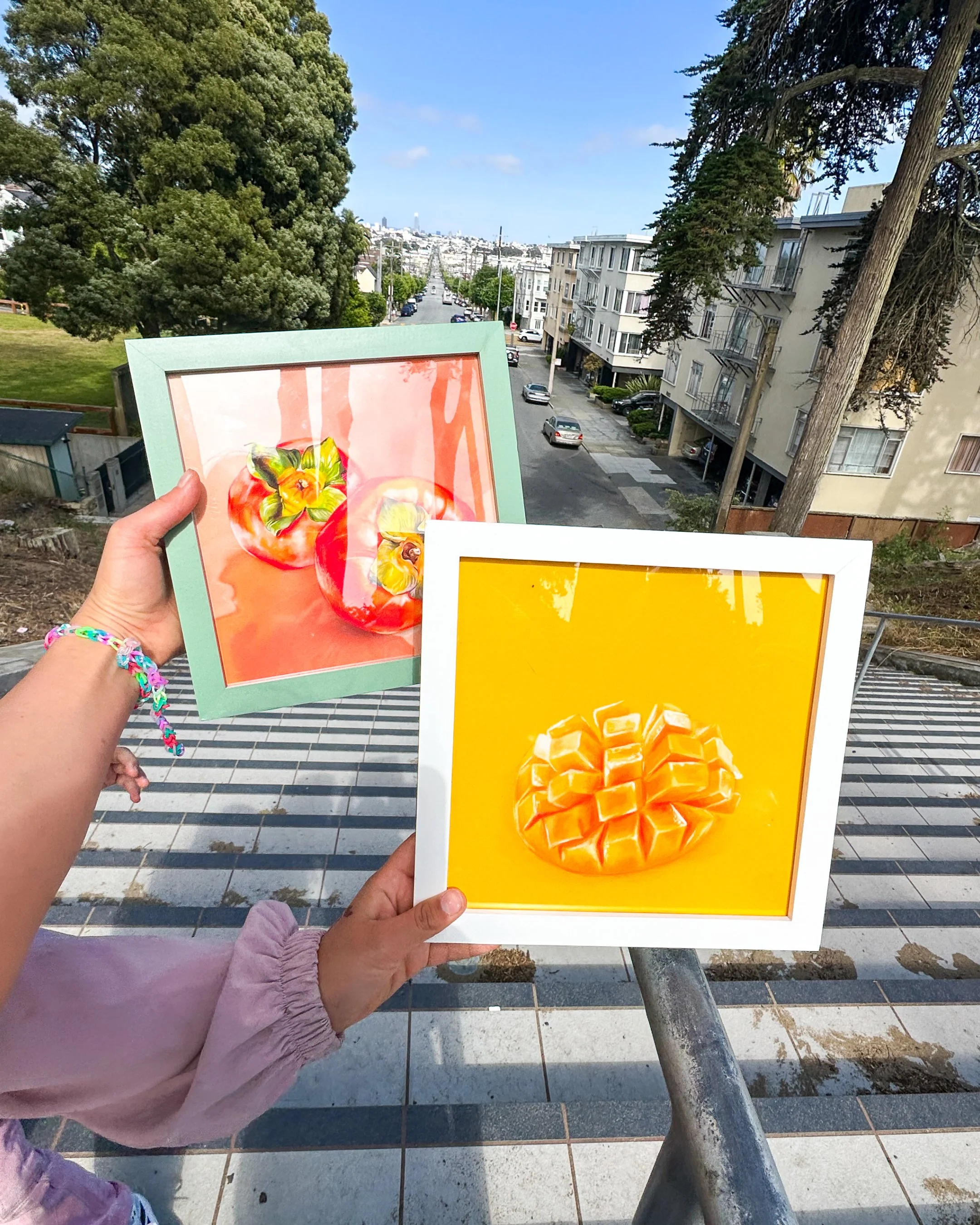
Fruit Stand is Emma’s art project & business celebrating food, art and nature through colorful illustrations of fruits, vegetables and plants. Inspired by her mom, Sydney, Emma’s love of produce grew from visits to farmers’ markets, family food traditions and discovering what’s in season.
After rediscovering her love of drawing in 2020, Emma created Fruit Stand to share that joy through prints, candles and other products (shop here). Her digitally hand-drawn and painted illustrations often get mistaken for watercolor or colored pencil. Today, she collaborates with local businesses and creative communities to bring her work to life.
This year, Emma began exploring live painting as a more hands-on way to connect with people through art and community.
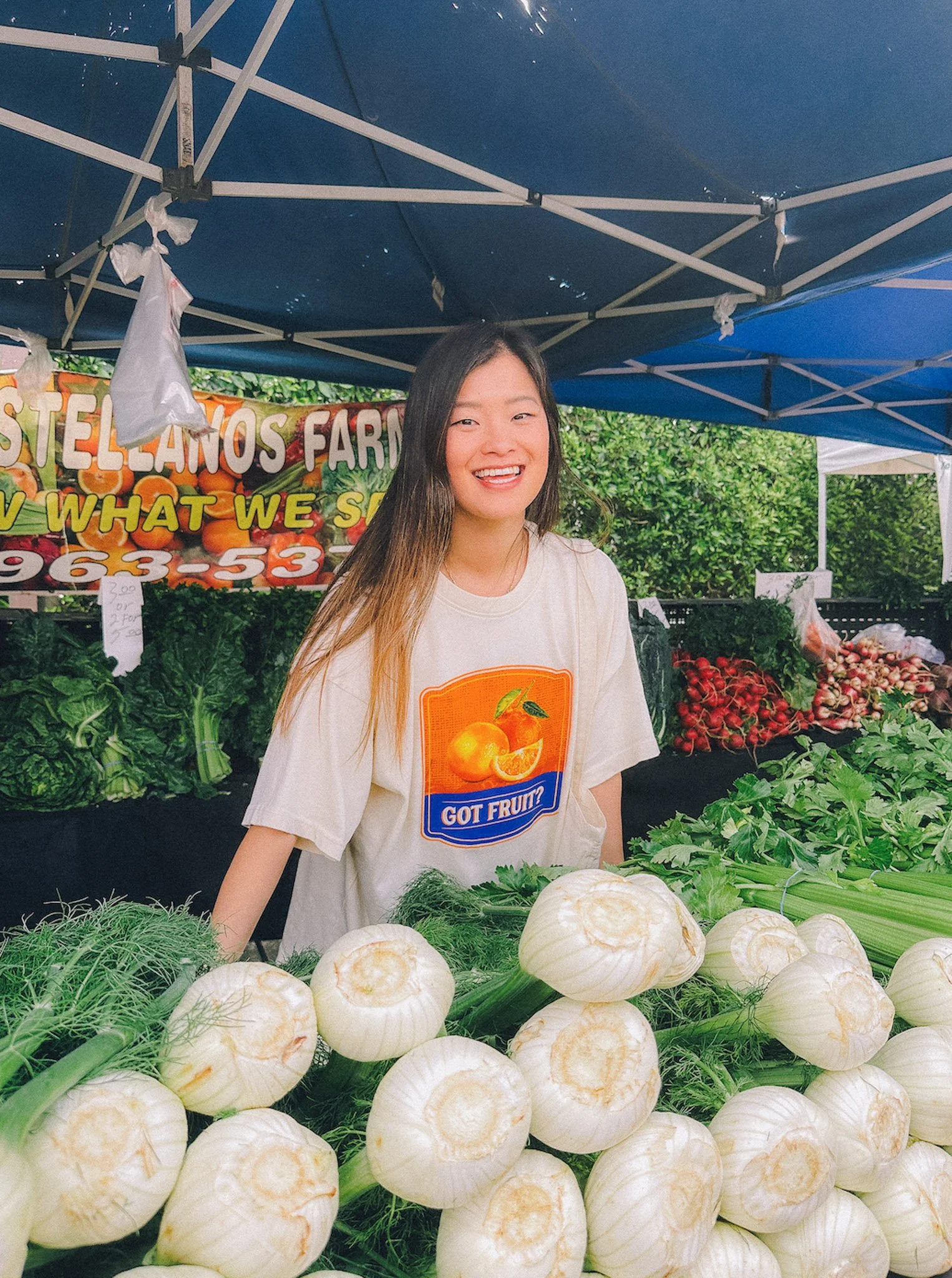
Emma at the Atwater Farmers’ Market, soaking up all inspiration from the in-season fruits & vegetables.
Photo credit: Emma Peters
Celebrating What’s in Season
The Mar Vista Green Tent is a place to explore small, practical ways to care for our planet and one another. From growing your own food to reducing waste and supporting local businesses, everyday choices can add up to meaningful change.
Shopping for seasonal produce is one way to put those values into practice. It helps us connect with the natural rhythms of the year, discover what grows in our region and support the farmers and vendors who bring fresh food to our community.
Through her painting, Emma hopes to celebrate that abundance and encourage us to look a little closer at the food we eat and the people who grow it.
Come Say Hello!
Join us for this special live painting experience at the Mar Vista Green Tent. Stop by to watch Emma paint, explore the farmers’ market and celebrate the season with us!
When: Sunday, October 25, 9 AM–2 PM
Where: Mar Vista Green Tent at the Mar Vista Farmers’ Market
Address: 12198 Venice Blvd, Los Angeles, CA 90066
*Please note that this is a live painting event only. Fruit Stand Art prints will not be available for purchase at the Green Tent, but you can explore Emma’s collection online at https://fruitstand.art and follow her on Instagram at @fruitstand.art.
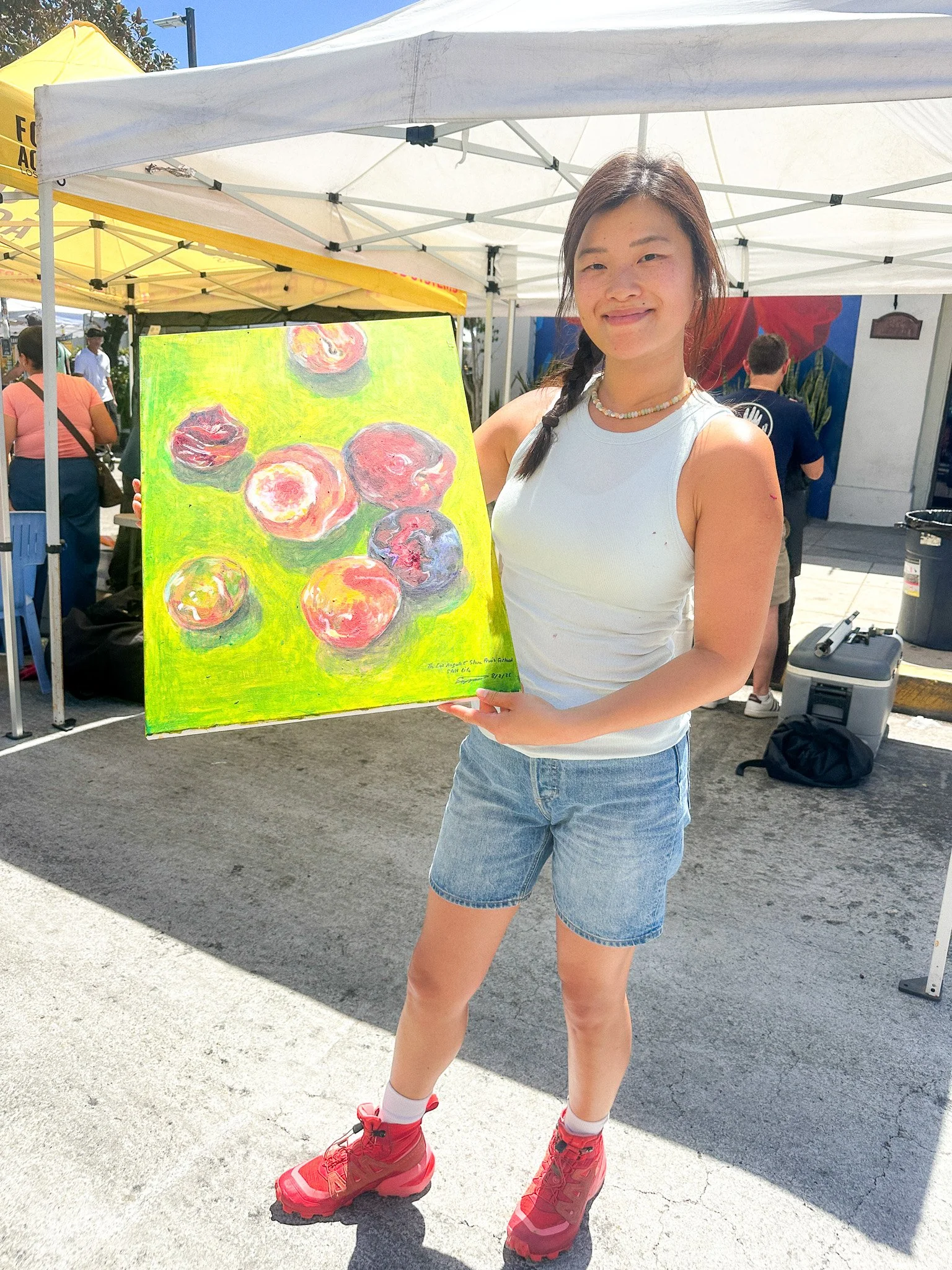
Emma with her first live still life painting at the Atwater Farmers’ Market.
Photo credit: Emma Peters